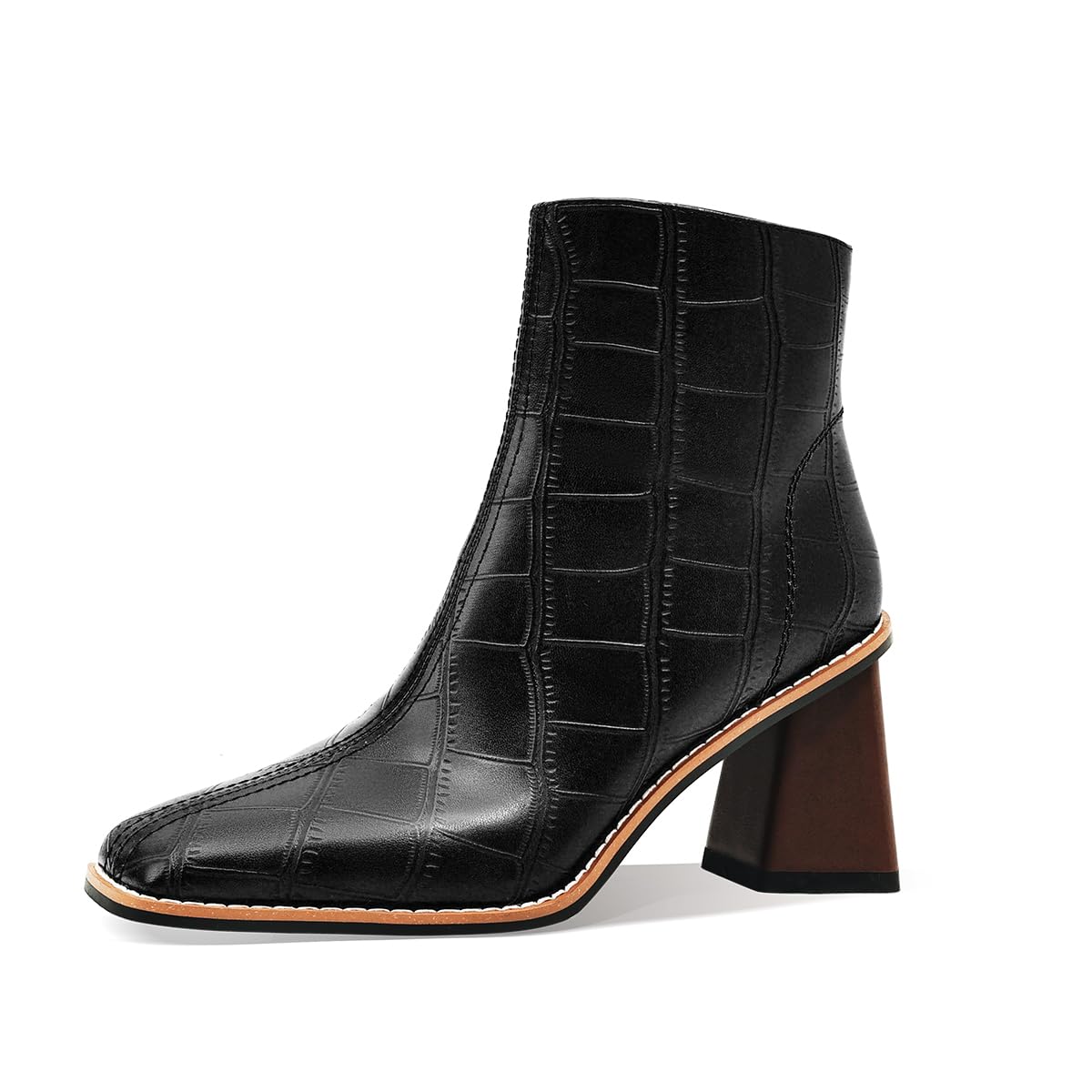
 A minimalist engagement, yet demanding.• — MOTIMODEN Womens Ankle Boots Chunky Mid Heel Booties Retro Square Pointed Toe Side Zipper Short Boots Heeled Shoes for Wom — :::
While it's hot.
Its sole meets the ground with an expected resilience; its upper cradles the ankle with a familiar, almost unremarkable, precision. Yet, one need only glance backward, or perhaps sideways, to unearth footwear concepts entirely alien to this pragmatic notion. Footwear that seems to defy the very purpose of locomotion, demanding not just a different gait, but a whole re-evaluation of what a foot-covering might truly accomplish. A peculiar proposition, wouldn't you say?
The Precarious Ascent
Consider the Venetian chopine, those towering curiosities of the 16th century. Not merely high heels, no. These were platforms of an entirely different order, constructed from cork and wood, often covered in luxurious fabrics. Some reached an astonishing height, twenty inches or more, elevating the wearer to an almost architectural stature. One can only imagine the precarious tilt, the need for a careful, deliberate shuffle, or indeed, the often-necessary assistance of attendants to navigate cobblestone streets without toppling over. Their function was less about swift movement and more about an extravagant display of wealth and status, placing the wearer literally above the mundane. A strange form of empowerment, perhaps, that rendered independent mobility almost impossible. It's a baffling commitment to appearance over practicality, demanding a particular kind of resignation from the feet within.
Intentional Grounding
Then there are the Japanese geta, wooden clogs, which present a different kind of deliberate disengagement from the ground. Unlike a flat sole that connects fully, the geta are supported by two distinct wooden 'teeth,' or *ha*, beneath the main platform. This design ensures that only specific, limited points make contact with the earth, keeping the wearer's traditional robes from dragging in the mud, yes, but also producing a distinctive, almost rhythmic clatter with each step. It's a sound that announces presence, a conscious auditory signature. The sensation, one presumes, is not one of gentle padding, but of firm, unyielding wood pressing against the sole, forcing a particular posture. A minimalist engagement, yet demanding. A perplexing balance of elevation and focused weight distribution.
The Unconformed Foot
Early footwear, long before the comfortable distinctions of 'left' and 'right' became commonplace, offers another peculiar deviation. Many historical shoe designs were symmetrical, crafted without any regard for the individual curvature of each foot. Imagine donning a pair of boots, their interiors identical mirror images, leaving the foot to adapt, to mold itself to an undifferentiated space. The materials—perhaps cured leather, sometimes raw hide—offered protection from the elements, certainly, but not necessarily ergonomic comfort as we understand it. It was a utilitarian approach, prioritizing basic enclosure over tailored fit. The foot was meant to conform to the shoe, rather than the other way around. A curious expectation of submission, isn't it? A testament to resilience, perhaps, or merely a lack of refined design for comfort.
Get It On Amazon ::: (brought to you by Kiitn)
▷ While it's hot.
Womens Ankle Boots Chunky Mid Heel Booties Retro Square Pointed Toe Side Zipper Short Boots Heeled Shoes for Women Fall Winter Price, $59.99 $ 59 . 99 See options
#Ad Our articles include affiliate links: If you buy something through a link, we may earn a commission 💕
[ Purchase Options ]


No comments:
Post a Comment